Understanding Interest Rates - How Barko Keeps Borrowing Affordable
Insights, advice, and stories from Barko.
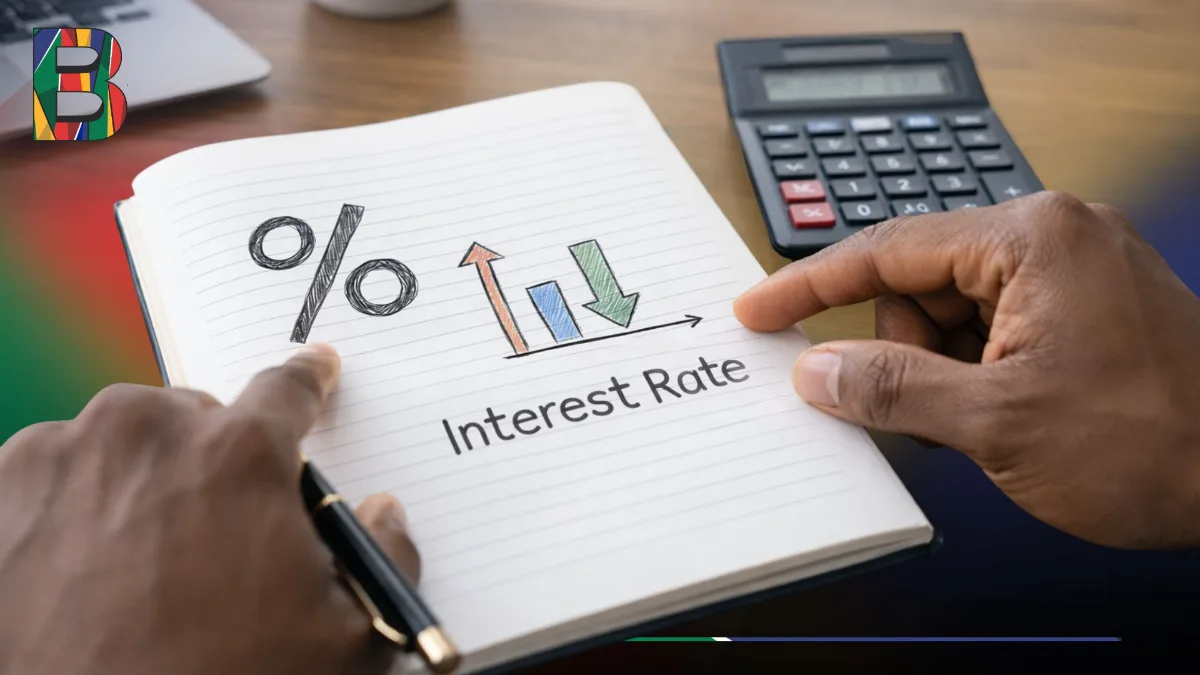
If you’re ready to sign a loan with Barko but want absolute clarity on what you’re agreeing to, good! That’s exactly how borrowing should work. Before you sign anything, you should understand what the core loan terms actually mean and how they affect you.
Let’s start with the most important one: the interest rate.
What is interest?
In simple terms, interest is the cost of borrowing money. When a credit provider lends you money, they charge you a fee for using that money. That fee is called interest, and it is expressed as a percentage of the loan amount.
Here is a simple example: if you borrow R1 000, the interest rate determines how much extra you will repay on top of that R1 000. The higher the rate, the more you pay back in total.
Interest is calculated on the deferred amount. The deferred amount consists of the capital plus the initiation fee, but only where the initiation fee has not been paid upfront. If the initiation fee is paid upfront, interest is calculated on the capital amount only. As repayments are made, the deferred amount reduces over time, and interest is then calculated on the reduced deferred amount.
Why do interest rates change?
Interest rates in South Africa do not shift randomly. Most types of credit are influenced by the South African Reserve Bank (SARB) through its monetary policy decisions. The SARB adjusts the repo rate, the rate at which it lends money to commercial banks. This, in turn, influences the prime lending rate, the benchmark many lenders use to price loans.
The SARB’s primary responsibility is to manage inflation and maintain price stability. When inflation rises too high, the SARB typically increases the repo rate, which makes borrowing more expensive across the economy.
However, not all interest rates move with the repo rate. As explained below, certain types of credit in South Africa carry fixed-rate caps set by law that do not change when the repo rate changes.
Different types of credit, different interest rates
The National Credit Act recognises different types of credit agreements and sets a maximum interest rate cap for each. No credit provider in South Africa may charge more than these prescribed limits.
- Mortgage agreement — a loan secured by property, such as a home loan. Maximum rate: repo rate plus 12% per annum.
- Credit facility — a revolving credit arrangement, such as a credit card or overdraft. Maximum rate: repo rate plus 14% per annum.
- Secured credit transaction — a loan secured against a movable asset, such as vehicle finance. Maximum rate: repo rate plus 17% per annum.
- Unsecured credit transaction — a loan that is not secured against any asset, based on your creditworthiness and affordability alone. Maximum rate: repo rate plus 21% per annum.
- Short-term credit transaction — a short-term loan of up to 6 months. This is the type of loan Barko offers. Importantly, the interest rate on short-term credit is fixed, and does not move with the repo rate. Maximum rate: 5% per month on the first short-term loan in a calendar year, and 3% per month on any further short-term loans in the same calendar year.
- Developmental credit agreement — credit extended for the purpose of small business development or low-income housing. Maximum rate: repo rate plus 27% per annum.
What this means for you as a borrower
Understanding which type of credit agreement you are entering into matters, because the rate cap that applies depends on the type of loan. When you borrow from Barko, you are entering into a short-term credit agreement. Your interest rate is fixed by law at a maximum of 5% per month for your first loan in a calendar year and 3% per month for any further loans in the same year. This rate does not change based on what the SARB does with the repo rate.
Responsible lending must align with these regulatory limits. At Barko, your rate is always within the legal cap, and it is clearly disclosed to you before you sign anything.
Interest is not your only cost
It is important to understand that interest is not the only fee a credit provider may charge. Under the National Credit Act, a credit provider may also charge the following:
- Initiation fee: a once-off fee for setting up your loan, capped at R165 plus 10% of the loan amount above R1 000, up to a maximum of R1 050 (excluding VAT).
- Monthly service fee: a fee charged every month to maintain your account, capped at R60 per month (excluding VAT).
- Credit insurance premium: a premium for cover that settles your outstanding balance in the event of death, disability, or retrenchment.
All of these costs are disclosed to you up front in your Pre-Agreement Statement and Quotation before you sign. At Barko, nothing is hidden. These elements are built into your loan structure from the start, so you always know the full cost of what you are agreeing to.
Conclusion
If you’re considering a loan and want transparent terms, clear repayment structures, and a responsible lending approach aligned with South African regulations, take the next step with confidence.
Get in touch with Barko at www.barko.co.za or call 087 980 5101 and apply today.
Barko Financial Services (Pty) Ltd, trading as Barko Loans, is a Registered Credit Provider (NCRCP 1764) and an Authorised Financial Services Provider (FSP 45614).
Terms and conditions apply. All credit is granted subject to a mandatory affordability assessment and credit check.